
Shipboard fires pose critical threats to maritime safety. As the global benchmark for vessel safety, the SOLAS (Safety of Life at Sea) Convention Chapter II-2 defines three primary fire resistance divisions: Class A, Class B, and Class C. These graded fire barriers contain fire spread, safeguarding crew and vessel safety. This guide breaks down their definitions, performance criteria, and applications to clarify the key differences between SOLAS fire classes.
1. Overview of SOLAS Fire Resistance Classes
SOLAS classifies ship bulkheads, decks, and fire boundaries into Class A, B, C—with descending fire resistance, each with sub-ratings for specific insulation durations to match compartment fire risk levels. All classes require FTP Code (Fire Test Procedures Code) certification to ensure structural integrity and thermal insulation complianceInternational Maritime Organization.
2. Class A Divisions: Highest-Grade Fire Barriers
2.1 Definition & Performance Standards
Class A divisions are the highest fire resistance rating on vessels. Constructed of steel or equivalent materials, stiffened for rigidity, and insulated with approved non-combustible materials, they meet strict criteria:
- Integrity: Prevent smoke and flame penetration for 60 minutes in standard fire tests;
- Insulation: Un Exposed side average temperature rise ≤140°C, single-point rise ≤180°C;
- Sub-classes: A-60 (60-min insulation), A-30 (30-min), A-15 (15-min), A-0 (no insulation, smoke/flame barrier only).
2.2 Typical Applications
Class A divisions serve as the primary fire defense for high-risk zones:
- A-60: Engine room boundaries, main vertical zone bulkheads, fuel tank perimeters;
- A-30: Galley-accommodation boundaries, store-machinery space dividers;
- A-15: Corridor-high risk compartment dividers, crew cabin-equipment area walls;
- A-0: Non-insulated fire barriers for low-risk isolation.
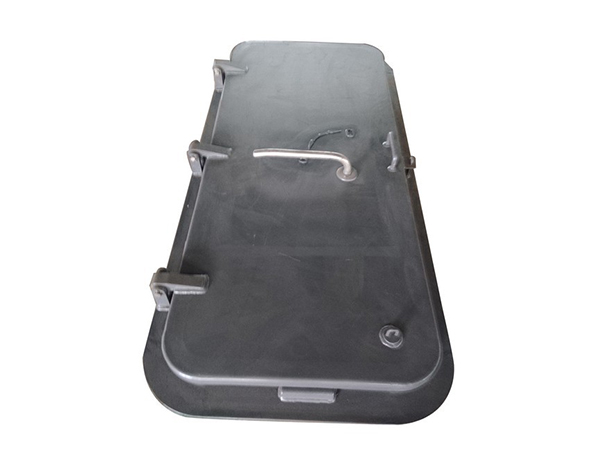
3. Class B Divisions: Intermediate Fire Partitions
3.1 Definition & Performance Standards
Class B divisions are constructed of non-combustible materials (no steel equivalence requirement) with limited low-flame-spread decorative panels, with lower performance thresholds than Class A:
- Integrity: Prevent flame penetration for 30 minutes (minor smoke allowed);
- Insulation: Un Exposed side average temperature rise ≤140°C, single-point rise ≤180°C;
- Sub-classes: B-15 (15-min insulation), B-0 (no insulation).
3.2 Typical Applications
Class B divisions prioritize accommodation and low-to-moderate risk areas, balancing safety and weight efficiency:
- B-15: Crew cabin bulkheads, corridor enclosures, public space dividers;
- B-0: Lightweight interior partitions, ceilings, linings for flame containment only.
4. Class C Divisions: Basic Fire Isolation
4.1 Definition & Performance Standards
Class C divisions are basic non-combustible partitions with no mandatory fire duration or insulation requirements. Made of lightweight non-combustible materials, they delay fire spread but do not block smoke/flame.
4.2 Typical Applications
Used in low fire risk areas for cost-effective lightweight construction:
- Public lounges, offices, internal store partitions;
- Non-load-bearing lightweight bulkheads, decorative dividers.
5. Key Differences: Class A vs B vs C Fire Divisions
| Comparison | Class A (A-60/A-30/A-15/A-0) | Class B (B-15/B-0) | Class C |
|---|---|---|---|
| Core Material | Steel/equivalent (≈4.5mm steel plate) | Approved non-combustible (no steel) | Lightweight non-combustible |
| Fire Integrity | 60-min smoke/flame proof | 30-min flame proof (minor smoke) | No mandatory integrity |
| Thermal Insulation | Strict (≤140°C/≤180°C) | Strict (≤140°C/≤180°C) | No insulation required |
| Fire Rating | Highest | Intermediate | Basic |
| Primary Use | Engine rooms, main vertical zones (high-risk) | Accommodation, corridors (moderate-risk) | Public areas, offices (low-risk) |
6. Conclusion: Selecting the Right Fire Class
SOLAS A/B/C divisions represent risk-based fire safety design: Class A secures high-risk zones, Class B protects accommodation, and Class C fits low-risk spaces. Vessel design, construction, and inspection must comply with SOLAS Chapter II-2, using FTP-certified divisions to contain fires and protect maritime life and property.